
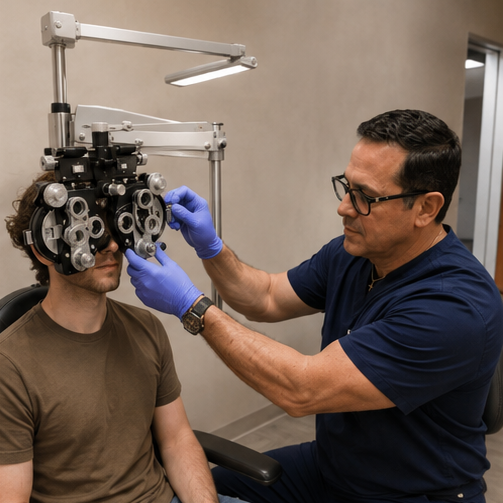
Before treatment, the doctor will carefully examine the cornea and ocular surface and determine whether amniotic membrane therapy is appropriate.
The membrane is then placed over the affected ocular surface. Depending upon the membrane selected, it may be supported by a retaining device, protected by a bandage contact lens, or applied using another ophthalmic technique.
Vision may temporarily be blurred while the membrane is in place.
Some patients notice a foreign-body sensation or awareness of the device during treatment. This usually improves after the membrane or retaining device is removed or dissolves.
Your doctor will schedule follow-up care to evaluate how the cornea is healing and determine whether additional treatment is necessary.
The membrane addresses the injured ocular surface, but successful long-term treatment also requires management of the underlying condition responsible for the surface breakdown.
Insurance Coverage and Medical Necessity: Amniotic membrane treatment may be covered by Medicare or commercial insurance when applicable medical-necessity requirements are satisfied. Coverage varies according to diagnosis, severity of disease, objective clinical findings, previous treatments, individual insurance benefits, and payer policy. Prior authorization or verification of benefits does not guarantee payment. When possible, our office will review applicable benefits and expected patient financial responsibility before treatment.